

Why Some Anime Games Make You Feel Like You’re Inside the Story
Discover how anime-inspired games use gameplay, character relationships and multiple perspectives to make storytelling more personal.
What changes when a machine lifeform asks you to put down your weapons, or when helping someone recover becomes part of the gameplay itself? In games such as NieR:Automata and Ni no Kuni: Wrath of the White Witch, moments like these show how a game can make its story something the player actively experiences.
In this feature, “anime games” refers broadly to games shaped by anime-inspired character design, visual language or storytelling traditions. That includes titles with a recognisably anime look as well as games such as NieR:Automata, whose visual style is not simply that of a conventional anime adaptation.
Their advantage is not that games automatically tell better stories than anime or films. It is that games can make the player participate in a story through exploration, decisions, relationships and gameplay systems.
Spoiler warning: The following sections discuss selected story situations and character developments from these games.
NieR:Automata Makes You Question What You Think You Know
NieR:Automata was released in 2017, developed by PlatinumGames and published by Square Enix. It launched on PlayStation 4 and PC, with later releases on Xbox One and Nintendo Switch. Its story follows androids 2B, 9S and A2 as they fight machine lifeforms in a war over Earth.
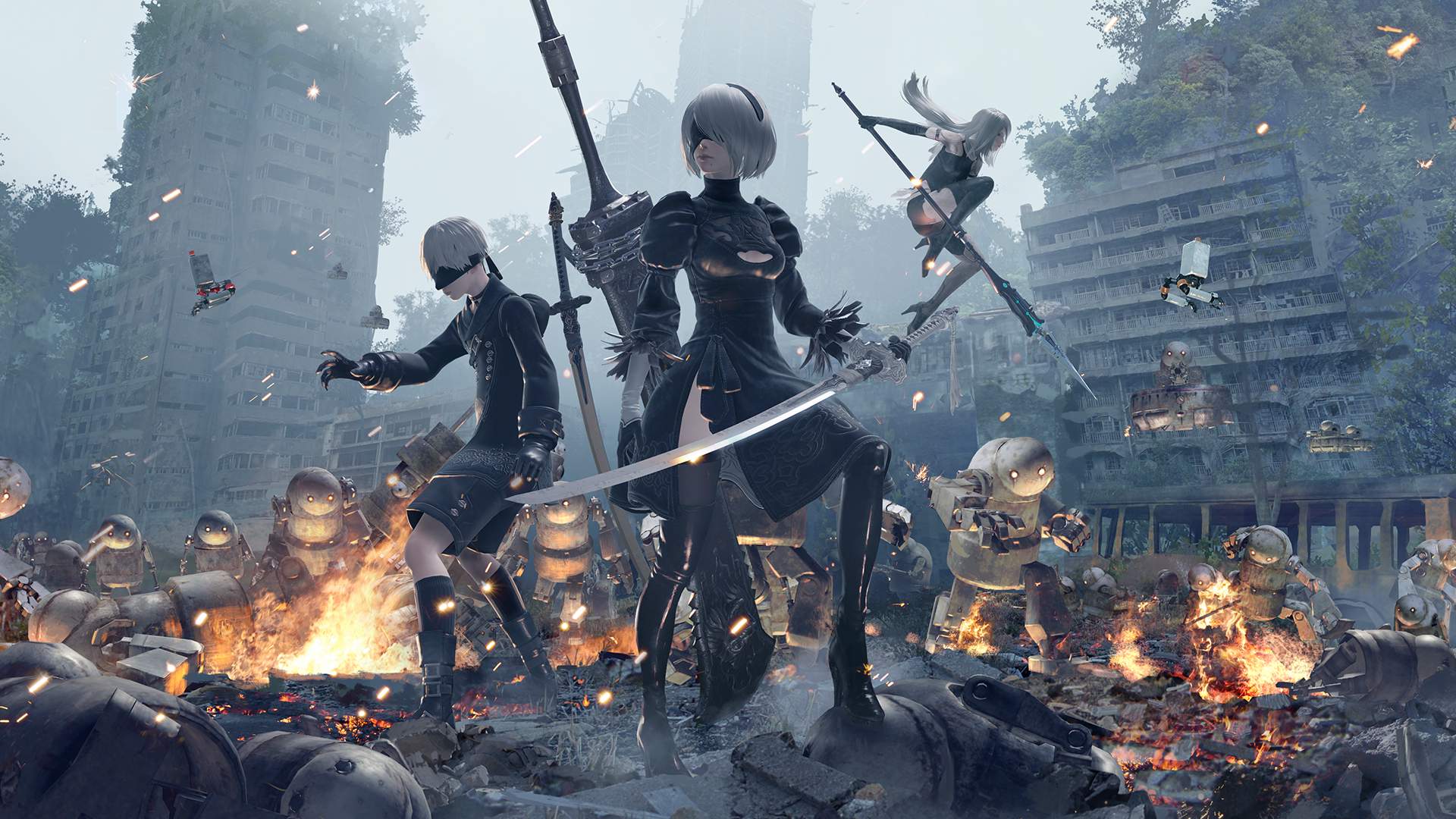
At first, the conflict appears straightforward. The androids are fighting to reclaim the planet, while the machines are presented as their enemies. The game gradually complicates that understanding, however, by introducing machine lifeforms whose behaviour does not fit the role of a mindless enemy.
One of the clearest examples is Pascal, a machine lifeform who rejects violence and seeks a peaceful existence with other like-minded machines. His village challenges the assumption that every machine must be treated as an enemy. Rather than simply telling players that the conflict is morally complicated, the game lets them encounter a community that makes that complication difficult to ignore.
The different playable perspectives deepen the effect. Following 2B, 9S and A2 reveals different sides of the conflict, and later developments change how earlier events can be understood. The player gradually assembles a larger picture through the act of playing, not just through a single explanation.
Persona 5 Royal Turns Relationships Into Part of the Adventure
Persona 5 Royal was first released for PlayStation 4 in 2020. Developed by Atlus and published by SEGA, the expanded version later arrived on PlayStation 5, Xbox One, Xbox Series X|S, Nintendo Switch and PC in 2022.

The game follows a student who becomes involved with the Phantom Thieves, a group that enters distorted mental worlds to confront people abusing their power. Yet its story is not limited to those missions. Players also manage a daily routine involving school, part-time activities, exploration and relationships.
The Confidant system is central to that structure. Spending time with other characters develops their relationships with the protagonist and reveals more about their personal struggles. Ryuji Sakamoto is one example: his reputation as a troublemaker and his difficult experiences with authority shape how others see him. Spending time with him reveals more about the person behind that reputation.
The calendar gives these relationships room to develop. Players decide how to spend their limited time, making social connections part of the adventure rather than optional background information. Not every interaction is equally compelling, but the structure gives ordinary moments a meaningful place alongside the supernatural story.
Ni no Kuni Shows How Gameplay Can Reflect a Story’s Themes
Ni no Kuni: Wrath of the White Witch was originally released for PlayStation 3 in 2013. Developed by LEVEL-5 and published by Bandai Namco Entertainment, it later received a remastered release for PlayStation 4, PC and Nintendo Switch in 2019, followed by an Xbox One release in 2022. Its animated sequences were created with the involvement of Studio Ghibli.
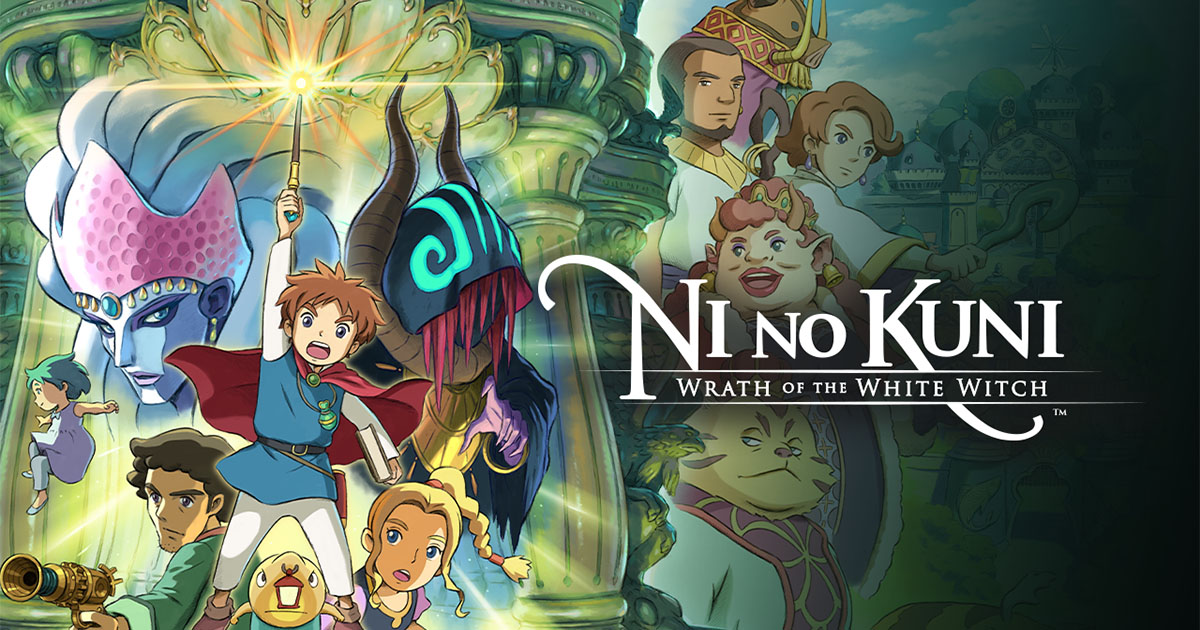
The game follows Oliver, a young boy who travels into another world after a tragic incident involving his mother. The adventure features colourful locations, magical creatures and animated sequences that help give the world the atmosphere of an animated fantasy film.
One of its most interesting storytelling ideas is connected directly to gameplay. Oliver encounters people who have become broken-hearted, and the Give Heart mechanic allows him to help by restoring emotional qualities such as courage and kindness.
This connects what the player does with what the story is trying to communicate. Helping someone is not only a conversation or a cutscene; it becomes an activity built into the adventure. The mechanic gives the game’s emotional themes a practical role in its world, encouraging players to take part in restoring something that has been lost.
Scarlet Nexus Uses Two Perspectives to Expand Its Story
Scarlet Nexus was released in 2021, developed by Bandai Namco Studios and published by Bandai Namco Entertainment for PlayStation 4, PlayStation 5, Xbox One, Xbox Series X|S and PC.
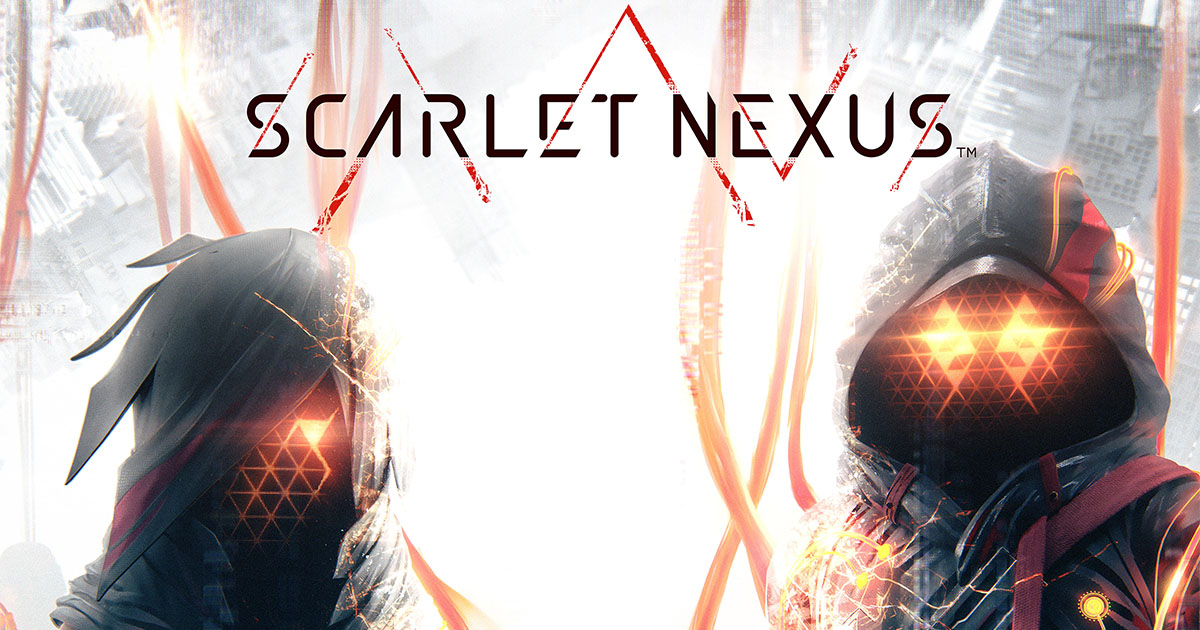
The game uses a dual-protagonist structure to explore its futuristic world. Players can begin with either Yuito Sumeragi or Kasane Randall, two members of the Other Suppression Force. Both characters have their own abilities, supporting characters and experiences, but their journeys connect through the wider conflict.
The two campaigns reveal different information and offer different relationships with the people around them. This gives players a reason to consider events beyond what one protagonist experiences. The world can feel larger because the player is not restricted to one character’s understanding of it.
There is a trade-off. Dividing information between two campaigns can make parts of the narrative feel fragmented, while some dialogue and character interactions may slow the momentum of the main story. Even so, the structure demonstrates how playable characters can shape the way a story is understood.
These four games approach storytelling in different ways. NieR:Automata challenges the player’s understanding of its conflict. Persona 5 Royal builds emotional connections through everyday relationships. Ni no Kuni connects its themes to gameplay mechanics, while Scarlet Nexus uses multiple protagonists to reveal different sides of its world.
None of these approaches guarantees a perfect story. Some players may prefer a more focused narrative, while others may find lengthy dialogue, repeated activities or multiple campaigns difficult to enjoy.
The strength of interactive storytelling is not that games automatically tell better stories than anime or films. It is that games can give players a role in how those stories unfold. When a game’s characters, choices and world feel connected to the player’s own actions, the experience becomes more than watching a story happen. It becomes something the player has taken part in.
More Gaming Stories from SANSTUDIOH
For another look at anime-inspired gaming, read our coverage of My Hero Ultra Rumble coming to mobile and The Apothecary Diaries: The False Imperial Brother game. Explore more coverage in the SANSTUDIOH Gaming section.
Official Game Pages and Sources
NieR:Automata — PlatinumGames · Square Enix press information
Persona 5 Royal — ATLUS · SEGA/PlayStation release announcement
Ni no Kuni: Wrath of the White Witch — Bandai Namco · Remastered edition
Scarlet Nexus — Bandai Namco · Bandai Namco Studios: game overview

Joshua
Joshua is a SANSTUDIOH writer with a passion for the worlds of anime, manga, and gaming. From major industry announcements to exciting new releases and stories fans might have missed, he enjoys exploring the details behind the headlines. His writing brings together curiosity, a love of pop culture, and a focus on keeping readers connected to the latest developments in entertainment.
More Stories
Fairy Tail Anime Review: Natsu, Lucy and the Magic of Friendship
A review of Fairy Tail's 328-episode anime, exploring Natsu, Lucy, Erza, Gray, Wendy and the guild's magic, friendships, strengths and weaknesses.
Under Ninja Manga Announces Four-Week Hiatus, Sets December 28 Return
Kengo Hanazawa’s Under Ninja manga is taking a four-week hiatus, with serialization scheduled to resume in Weekly Young Magazine on December 28, 2026.
WIND BREAKER Anime Review: When Fighting Becomes a Way to Protect Others
A review of WIND BREAKER Seasons 1 and 2, exploring Haruka Sakura's growth, CloverWorks' fight animation, memorable characters and what makes Bofurin stand out.
Leave a Reply